Description
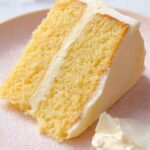
A moist and tender soft vanilla cake made with a blend of all-purpose flour, cornstarch, and buttermilk, enhanced with vanilla and a subtle tang from vinegar. Perfectly paired with a creamy, smooth American-style vanilla buttercream frosting that is sweet yet balanced, making it ideal for celebrations or everyday treats.
Ingredients
Scale
Vanilla Cake
- 2¼ cups (300 g) all purpose flour
- ¼ cup (25 g) cornstarch
- ½ tsp baking soda
- 1 tsp baking powder
- ½ tsp salt (omit if using salted butter)
- ½ cup (113 g) unsalted butter, room temperature
- ½ cup (105 g) unflavoured vegetable oil (canola recommended)
- 1⅔ cups (332 g) white granulated sugar
- 3 large eggs, room temperature
- 1¼ tbsp vanilla essence/extract
- 1 tsp white vinegar
- 1½ cups (337 g) buttermilk, room temperature
Vanilla Buttercream Frosting
- 1½ cups (340 g) unsalted butter, room temperature
- 3 cups (375 g) powdered sugar (icing/confectioners’ sugar)
- 1½ tsp vanilla essence/extract
- 1½ tbsp milk (heavy or whipping cream)
Instructions
- Preheat Oven: Preheat your oven to 165 °C (330°F) with the fan on. Grease and/or line two 8-inch cake tins with cake release or parchment paper.
- Combine Dry Ingredients: Sift together the all-purpose flour, cornstarch, baking soda, baking powder, and salt in a bowl. Whisk to mix well and set aside.
- Cream Butter, Oil, and Sugar: In a separate bowl, using an electric mixer, cream the room temperature butter, vegetable oil, and granulated sugar on medium-high speed for about 2 minutes until light and creamy.
- Add Eggs: Add the eggs one at a time, mixing well after each addition for about 10-15 seconds to ensure they are fully incorporated.
- Add Vanilla, Vinegar, and Buttermilk: Mix in the vanilla extract, white vinegar, and half a cup of buttermilk until combined. Stop using the mixer after this step as the remaining steps will be completed by hand.
- Fold Dry Ingredients and Remaining Buttermilk: Gently fold half of the dry ingredients into the wet mixture using a spatula until just combined. Next, add 1 cup of the buttermilk and fold gently. Finally, fold in the remaining dry ingredients until the batter is uniform but do not overmix.
- Bake Cakes: Evenly divide the batter between the prepared 8-inch cake pans. Bake in the preheated oven for 30 minutes or until a toothpick inserted in the center comes out clean.
- Cool Cakes: Let the cakes cool in their pans for 15-20 minutes, then turn them out onto wire racks to cool completely before frosting.
- Make Buttercream Frosting: In a stand mixer bowl fitted with a paddle attachment, combine powdered sugar, butter, vanilla extract, and milk. Mix on low speed for about 1 minute to combine, then increase to medium-high speed and whip for 10 minutes, scraping down the bowl halfway through until the frosting is light and creamy.
- Assemble and Frost: Once the cakes are completely cooled, frost using the prepared vanilla buttercream or a frosting of your choice.
Notes
- You may substitute the combination of all-purpose flour and cornstarch with 325g of cake flour for a lighter texture.
- If using a stand mixer, use the paddle attachment for creaming and switch to folding by hand after adding the buttermilk and dry ingredients to prevent overmixing.
- Gentle folding preserves cake tenderness by minimizing gluten development; mix only until flour strands disappear and batter is uniform.
- This frosting is an American-style buttercream, sweeter than Swiss or French buttercream. For less sweetness, consider Swiss meringue or French buttercream alternatives.
- If your oven lacks a convection (fan) function, increase baking temperature to 175°C (347°F) to achieve similar baking results.
- Store-bought buttermilk is thicker; if using a homemade substitute, reduce the amount to about 1¼ cups (275g) for best results.
- Measure flour by weight (grams) for accuracy due to the recipe’s delicate fat-to-liquid balance.
- Cooling cakes completely before frosting prevents the buttercream from melting and sliding off.
Nutrition
- Serving Size: 1 slice
- Calories: 350 kcal
- Sugar: 30 g
- Sodium: 150 mg
- Fat: 20 g
- Saturated Fat: 10 g
- Unsaturated Fat: 9 g
- Trans Fat: 0 g
- Carbohydrates: 40 g
- Fiber: 1 g
- Protein: 4 g
- Cholesterol: 65 mg