Korean Beef Sesame Noodles in 20 Minutes Recipe
If you’re looking for a quick dinner that’s packed with flavor and totally satisfying, you’ve got to try my Korean Beef Sesame Noodles in 20 Minutes Recipe. Seriously, this dish is my go-to when I want something fast, comforting, and just the right balance of sweet, savory, and a touch of heat. Plus, it’s super versatile and perfect for weeknights when time is tight but you don’t want to sacrifice taste. Trust me, once you make this, it’ll quickly become one of your favorites too!
Why This Recipe Works
- Speed and Simplicity: Ready in just about 20 minutes, perfect for those hectic nights.
- Balanced Flavors: The combination of honey, soy, and gochujang delivers sweet, savory, and spicy notes.
- Nutty Texture: Toasted sesame seeds and oil bring a warm, fragrant depth you don’t want to miss.
- Customizable Ingredients: Easy to swap veggies or protein based on what you have or prefer.

Ingredients & Why They Work
The magic of this Korean Beef Sesame Noodles in 20 Minutes Recipe lies in the balance of fresh aromatics, a vibrant sauce, and quick-cooking noodles that all come together seamlessly. When I’m shopping, I like to pick fresh ginger and garlic that look firm and fragrant — they really lift the sauce. Using tamari or soy sauce ensures that salty, umami base, while honey adds just the right touch of sweetness.

- Garlic: Fresh cloves give a punch of flavor that canned or powdered just can’t match.
- Fresh ginger: Adds a zesty brightness that cuts through the richness.
- Tamari or soy sauce: I prefer tamari for gluten-free, but either brings savory depth.
- Honey: Balances the salty and spicy with gentle sweetness.
- Rice vinegar: Brightens the sauce with acidity and a mild tang.
- Gochujang: The Korean chili paste that provides that signature spicy-sweet kick.
- Toasted sesame oil: Absolutely key for that unmistakable nutty aroma.
- Brown rice noodles: Cook quickly and hold up great to the sauce without turning mushy.
- Mixed stir fry vegetables: Use whatever you like or have on hand, freshness matters!
- Shallots: Their caramel sweetness develops beautifully when cooked down.
- Flank steak or chicken breast: Thinly sliced so it cooks fast and stays tender.
- Toasted sesame seeds: Adds texture and enhances the sesame flavor profile.
- Fresh basil: Brightens the dish with an herbal pop right before serving.
Make It Your Way
One of the things I appreciate most about this Korean Beef Sesame Noodles in 20 Minutes Recipe is how easy it is to make it your own. Over time, I’ve swapped in different veggies, tried chicken instead of beef, and even adjusted the spice level depending on the mood and who I’m cooking for. Don’t be afraid to get creative!
- Vegetarian option: I’ve used tofu or tempeh instead of meat — just add it in during the last minutes of cooking to soak up that incredible sauce.
- Extra kick: When I want more heat, I add extra gochujang or a pinch of chili flakes — but be sure to balance with a little more honey.
- Seasonal veggies: Stir in snap peas, bell peppers, or mushrooms depending on what’s fresh and in season.
- Gluten-free swaps: Brown rice noodles work great, but glass noodles or shirataki noodles are good alternatives.
Step-by-Step: How I Make Korean Beef Sesame Noodles in 20 Minutes Recipe
Step 1: Whip Up the Flavorful Sauce
This is where the magic happens. I combine the chopped garlic, fresh ginger, tamari (or soy sauce), honey, rice vinegar, gochujang, and toasted sesame oil in a glass jar and give it a good shake or whisk until everything’s mixed well. It smells incredible right here — you can already tell it’s going to be delicious. If you want to save time later, you can even make this sauce ahead and keep it in the fridge.
Step 2: Cook the Noodles ‘Al Dente’
Cook the brown rice noodles according to package directions — this usually takes about 6 minutes. I like to rinse them well under cold water after draining to stop the cooking process and prevent them from sticking together later. Trust me, that little step makes a noticeable difference.
Step 3: Stir-Fry Vegetables to Perfection
Heat 1 tablespoon of sesame oil in a large skillet or wok over high heat. Toss in your mixed stir fry veggies and cook just until they start to wilt, usually 2-3 minutes tops—keep them crunchy for contrast. Then stir in 2 tablespoons of your pre-made sauce so the veggies get nicely coated and flavorful. Once they’re done, take them out and set aside to keep the pan clean for the next step.
Step 4: Sear Shallots and Sizzle the Beef
Add the remaining tablespoon of oil to the same skillet, then cook the sliced shallots for about 2 minutes until they soften and turn golden — that caramelization adds so much flavor! Next, lay the thinly sliced flank steak flat in the pan without stirring so it sears nicely for 2 minutes. Once browned, toss the meat and pour in the rest of your sauce. Let it simmer briefly, just about a minute, so everything melds together beautifully.
Step 5: Bring It All Together
Now toss in your cooked noodles and the stir-fried veggies back into the skillet. Give everything a good stir and cook for another 2-3 minutes until the noodles are completely coated in that luscious sauce. Finally, turn off the heat, stir in fresh basil leaves and toasted sesame seeds, which add a pop of freshness and crunch right before serving.
Tips from My Kitchen
- Don’t Overcook Your Beef: Getting a quick sear with high heat keeps the beef tender and juicy — don’t crowd the pan or stir too much early on.
- Prep Ingredients Ahead: Chop your veggies and protein before starting to cook so everything moves along smoothly; this recipe is all about speed.
- Toast Sesame Seeds Fresh: I like to toast them in a dry pan just a minute before serving for extra aroma and crunch.
- Adjust Spice Gradually: Gochujang varies in heat; start with less and add more if you want a stronger kick rather than overpowering the dish.
How to Serve Korean Beef Sesame Noodles in 20 Minutes Recipe

Garnishes
I always top the noodles with extra fresh basil leaves and a sprinkle of toasted sesame seeds for bursts of flavor and texture. Sometimes, I throw on thinly sliced scallions or a handful of chopped peanuts when I want some crunch. A squeeze of lime juice can brighten the whole dish too if you want a citrusy twist — it’s a little trick I picked up from a Korean food market visit!
Side Dishes
Though this meal stands on its own, I like to serve it with a simple cucumber kimchi or a lightly dressed Asian slaw for an extra refreshing element. Steamed edamame or a quick miso soup also complement the flavors perfectly when hosting friends or family.
Creative Ways to Present
For special occasions, I’ve plated this dish in pretty bowls and added edible flowers or thin chili rings to up the wow factor. Serving in individual bamboo steamers or layered in a glass parfait glass as a noodle “cocktail” for a fun party appetizer has also been a hit!
Make Ahead and Storage
Storing Leftovers
I usually store leftovers in an airtight container in the fridge and eat them within 2-3 days. The noodles soak up the sauce overnight, so sometimes I add a splash of water or a little sesame oil when reheating to loosen things back up.
Freezing
While I haven’t frozen the fully assembled dish often because I like it fresh, I’ve frozen the sauce and cooked beef separately. When it’s time to eat, just thaw and toss everything together with freshly cooked noodles — that keeps texture and flavor intact.
Reheating
Reheating gently on the stovetop with a splash of water or broth helps prevent the noodles from drying out. I avoid microwaving if possible because it can make the beef tough and noodles clumpy.
FAQs
-
Can I use another type of noodle for this Korean Beef Sesame Noodles in 20 Minutes Recipe?
Absolutely! While brown rice noodles work great here, you can substitute with soba, udon, or even zucchini noodles for a low-carb twist. Just adjust the cooking time accordingly and make sure the noodles hold up to the sauce without getting mushy.
-
What if I don’t have gochujang?
If you can’t find gochujang, a mix of chili paste with a bit of miso or even a dash of sriracha plus a little sugar can mimic some of that sweet-heat umami. But honestly, I recommend trying to grab some gochujang next time—it really elevates the dish.
-
How do I make this recipe spicier or milder?
To dial up the spice, add extra gochujang or toss in chili flakes or fresh chili slices. To cool it down, simply reduce the amount of chili paste and balance with a touch more honey or vinegar to keep flavor harmony.
-
Can I prep this Korean Beef Sesame Noodles in advance?
Yes! You can prep the sauce in advance and keep prepped veggies and protein ready to go. Just cook everything fresh when you’re ready to eat for the best texture and taste.
Final Thoughts
This Korean Beef Sesame Noodles in 20 Minutes Recipe has earned a special spot in my meal rotation because it’s quick, comforting, and endlessly adaptable. Whether you’re cooking for a hungry family or whipping up a solo dinner, it hits the mark every time with that perfect mix of snap, spice, and savory goodness. I hope you enjoy making it as much as I do—give it a whirl and soon it’ll be your trusted weeknight hero too!
Print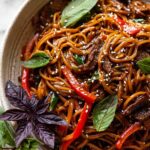
Korean Beef Sesame Noodles in 20 Minutes Recipe
- Prep Time: 15 minutes
- Cook Time: 10 minutes
- Total Time: 25 minutes
- Yield: 4 servings
- Category: Main Course
- Method: Stovetop
- Cuisine: Korean
Description
A quick and flavorful 20 minute Korean Beef Sesame Noodles recipe featuring tender flank steak, fresh vegetables, and a savory-spicy sauce packed with garlic, ginger, and Gochujang. Perfect for a balanced and delicious weeknight meal.
Ingredients
Sauce
- 4 cloves garlic chopped
- 1 tablespoon chopped fresh ginger
- 1/2 cup tamari or soy sauce
- 1/4 cup honey
- 2 tablespoons rice vinegar
- 3 tablespoons Gochujang (Korean chili paste)
- 1 tablespoon toasted sesame oil
Stir Fry
- 8 ounces brown rice noodles
- 2 tablespoons sesame oil
- 3 cups mixed stir fry vegetables
- 3 shallots, sliced
- 1 pound flank steak or chicken breast, sliced thin
- 1/4 cup toasted sesame seeds
- 1/2 cup fresh basil
Instructions
- Make the sauce: Combine all sauce ingredients in a glass jar. Shake or whisk thoroughly to blend all flavors together.
- Prepare noodles: Cook the brown rice noodles according to package directions until tender. Drain and rinse under cold water to stop cooking and prevent sticking.
- Cook vegetables: Heat 1 tablespoon sesame oil in a large skillet over high heat. Add mixed stir fry vegetables and cook, stirring occasionally, until wilted, about 2-3 minutes. Stir in 2 tablespoons of the prepared sauce, cooking until the sauce evenly coats the veggies. Remove vegetables from the pan and set aside.
- Sauté shallots and meat: In the same skillet, add the remaining 1 tablespoon sesame oil. Add sliced shallots and cook for 2 minutes until deeply softened and fragrant. Add the thinly sliced flank steak, cooking without stirring for 2 minutes to sear. Toss the meat, then pour in the remaining sauce. Let cook for 1 minute to simmer and meld flavors.
- Combine and finish: Stir in the cooked noodles and previously cooked vegetables. Cook for 2-3 minutes more, tossing to ensure the sauce fully coats all ingredients and everything is heated through.
- Serve: Remove the skillet from heat. Stir in fresh basil and toasted sesame seeds for added aroma and texture. Serve immediately garnished with extra fresh basil if desired.
Notes
- Use tamari for a gluten free option instead of regular soy sauce.
- Adjust the amount of Gochujang based on your preferred spice level.
- Substitute flank steak with thinly sliced chicken breast for a lighter protein option.
- Brown rice noodles provide a great gluten free alternative but regular wheat noodles can also be used.
- Fresh basil can be substituted with cilantro or green onions if preferred.
- Cook noodles just until tender to avoid mushy texture when stir frying.
- Use a high smoke point oil to prevent burning during high heat cooking.
Nutrition
- Serving Size: 1 serving
- Calories: 480 kcal
- Sugar: 12 g
- Sodium: 900 mg
- Fat: 14 g
- Saturated Fat: 3 g
- Unsaturated Fat: 9 g
- Trans Fat: 0 g
- Carbohydrates: 52 g
- Fiber: 5 g
- Protein: 32 g
- Cholesterol: 70 mg