Classic Coq au Vin Recipe
If you’ve ever dreamed of making a classic French dish that’s both comforting and impressive, this Classic Coq au Vin Recipe is exactly what you need to try next. Trust me, it’s a fan-freaking-tastic way to enjoy tender chicken swimming in a rich wine sauce, filled with savory mushrooms, pearl onions, and smoky bacon. Whether it’s your first time tackling this traditional recipe or you’re looking for a reliable version to perfect, I’ll walk you through all the steps, tricks, and tips to make this one a winner every time.
Why This Recipe Works
- Deep, layered flavor: Slow-simmered chicken and vegetables soak up the rich red wine sauce beautifully.
- Balanced textures: Crispy browned chicken skin contrasts with tender mushrooms and silky pearl onions.
- Traditional technique with modern tips: I share personal insights to help you avoid common mistakes and get authentic results.
- Make ahead friendly: This dish tastes even better the next day and makes for perfect leftovers or freezer meals.

Ingredients & Why They Work
Each ingredient in my Classic Coq au Vin Recipe plays a crucial part, coming together like a well-rehearsed orchestra. From the wine you choose to the smoky bacon, these components aren’t just there for show — they build the layers of flavor you’ll cherish in every bite. I always look for fresh herbs and great-quality chicken to make it sing.
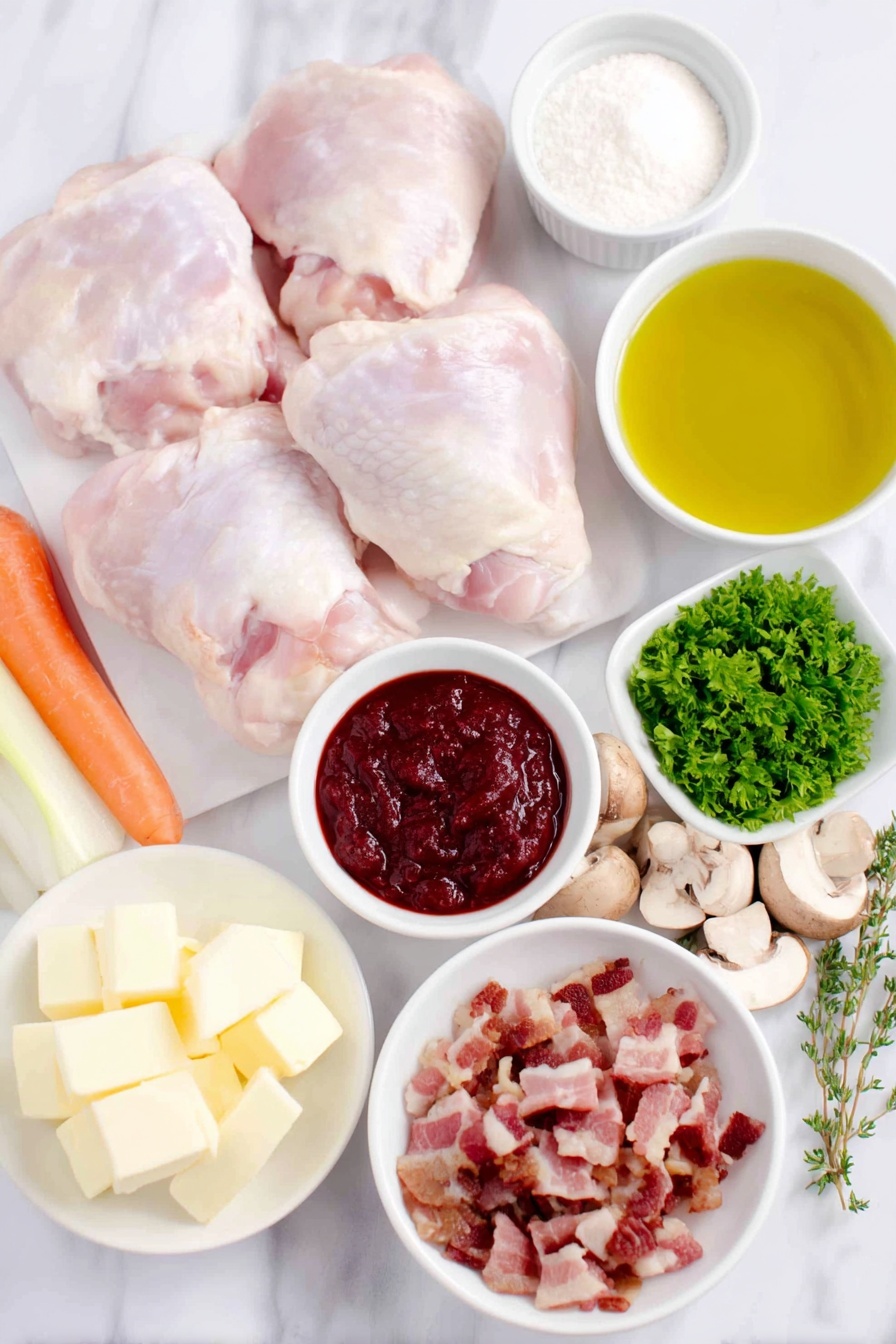
- Chicken thighs and drumsticks: Bone-in, skin-on cuts give you the most flavor and help keep the meat tender and juicy during slow cooking.
- Lardons or slab bacon: Adds a wonderful smoky depth and a little saltiness; bacon fat also enriches the sauce.
- Yellow onion & carrots: These vegetables provide a natural sweetness and foundation for the sauce.
- Garlic: A classic aromatic that enhances savory richness without overwhelming.
- Tomato paste: Brings a subtle acidity and depth to balance the wine’s fruitiness.
- Flour: Slightly thickens the sauce while lending a delicate body.
- Red wine (Burgundy or Pinot Noir): The heart of the dish — adds complexity, tang, and beautiful color to the stew.
- Bay leaf and fresh thyme: Classic herbs that infuse the stew with a comforting, woodsy fragrance.
- Chicken stock: Boosts savory richness and melds the wine and aromatics together.
- Butter: Enriches the sauce and helps brown the vegetables and mushrooms.
- Pearly onions: Their sweetness and delicate texture are exactly what this dish loves. If fresh aren’t available, frozen pearl onions work great too.
- Cremini mushrooms: Earthy mushrooms that soak up the sauce and add a lovely bite.
- Parsley: A fresh garnish that brightens and balances the richness just before serving.
Make It Your Way
This Classic Coq au Vin Recipe can adapt to your tastes or pantry staples without losing its soul. I often tweak it just a little depending on the season or what I have in the fridge — and you absolutely should too. Don’t be afraid to play around a bit, it’s part of the fun!
- Variation: I sometimes swap cremini mushrooms for shiitake, which adds a nice woodsy flavor, especially in fall. It’s a subtle change, but delicious.
- Dietary tweak: For a lighter version, removing the bacon is fine — just add a touch of smoked paprika or a splash of liquid smoke to keep that smoky note.
- Wine alternatives: If you don’t have Burgundy or Pinot Noir, a decent quality Merlot or Zinfandel can work without overwhelming the dish.
- Vegetarian spin: While not traditional, you could use mushrooms and pearl onions with vegetable stock and a red wine reduction for a hearty veggie-friendly stew.
Step-by-Step: How I Make Classic Coq au Vin Recipe
Step 1: Browning the Chicken and Lardons for Flavor
Start by patting your chicken pieces completely dry and seasoning them generously with salt and pepper. I’ve learned the hard way that wet chicken won’t brown well, and you miss out on that golden, crisp skin that adds so much flavor. Heat a teaspoon of vegetable oil in a heavy Dutch oven over medium-high heat and gently brown your diced bacon or lardons until crispy — about 6 to 8 minutes. Remove the bacon, leaving that flavorful fat in the pot. Then, brown the chicken in batches without crowding the pan, turning to get an even deep golden color all around, which usually takes 8 to 10 minutes. This step might feel slow, but it’s worth every second because that crust locks in flavors and juices.
Step 2: Building the Flavor Base with Vegetables and Wine
Once your chicken is browned and resting, lower the heat and add your onions and carrots to the pot. Let them soften for about 3 minutes — you want them tender but not caramelized here. Stir in the minced garlic just long enough to release its lovely aroma, typically about 1 minute, then add the tomato paste and flour, cooking for an additional couple of minutes to eliminate any raw taste. Pour in the whole bottle of red wine, add your bay leaf and thyme sprigs, and use a wooden spoon to scrape up all those golden bits stuck to the bottom of the pot. This is where the magic really starts! Let the wine reduce by half, which usually takes around 10 minutes, keeping an eye to skim off any foam as it simmers.
Step 3: Slow Cooking the Chicken Till Tender
Next, add your chicken stock, season with salt and pepper, and bring everything to a boil. Return the chicken and bacon, along with any accumulated juices, to the pot. Cover it up and transfer it to a preheated 350°F oven. Let it cook gently for about 45 minutes until the chicken is fall-off-the-bone tender. I love this step because the slow braise softens the meat and infuses it with all those rich flavors, making every morsel a little piece of heaven.
Step 4: Sautéing Mushrooms and Pearl Onions
While the chicken is nearing readiness, get your pearl onions and mushrooms ready. Heat oil and butter in a skillet over medium-high heat, then brown the pearl onions with a pinch of salt for 5 to 8 minutes. Remove and reserve them, then do the same with the mushrooms, adding salt and pepper to taste. This ensures they’re caramelized but still tender, creating that perfect texture contrast in your final dish.
Step 5: Finishing the Sauce and Bringing It All Together
When the chicken is done, carefully take it out and tent loosely with foil to keep warm. Toss out the bay leaf and thyme sprigs. Now, if your sauce isn’t thick enough for your liking, mix a beurre manié — equal parts softened butter and flour mashed together — and whisk it in over medium-high heat until the sauce thickens. If it’s too thick, just add a splash of stock or even some wine to thin it out. Taste and adjust seasoning, then stir in fresh parsley along with your sautéed mushrooms and pearl onions. Return the chicken to the pot or serving dish, garnish with the rest of the parsley, and voilà — dinner is served!
Tips from My Kitchen
- Dry Chicken is Key: Always pat your chicken dry before browning to get that irresistible crispy skin.
- Don’t Rush Browning: Take your time to brown the chicken and bacon well — it builds a deep flavor foundation that can’t be faked.
- Wine Choice Matters: Use a good quality Burgundy or Pinot Noir, but avoid anything too tannic or oaky, which can overpower the dish.
- Beurre Manié Magic: This simple butter-flour combo is my secret weapon when I want a silkier, perfectly thickened sauce without lumps.
How to Serve Classic Coq au Vin Recipe
Garnishes
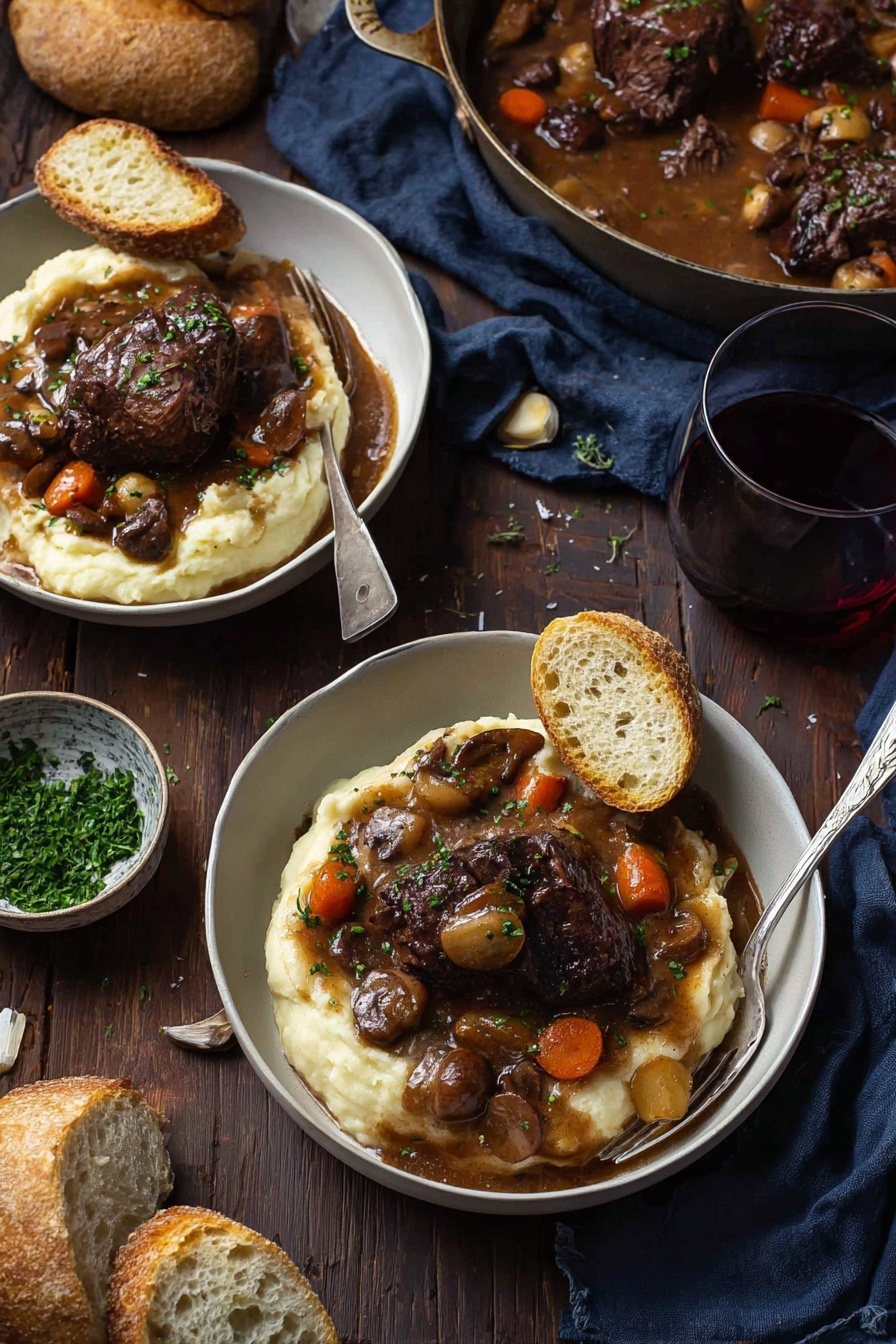
I always finish my Classic Coq au Vin with a generous sprinkle of fresh chopped parsley for color and brightness. Sometimes, if I’m feeling fancy, I add a little cracked black pepper on top just before serving. These small touches bring the whole dish to life on the plate.
Side Dishes
This dish pairs beautifully with creamy mashed potatoes, which soak up the luscious sauce perfectly. If you want something lighter, buttered egg noodles or crusty French bread are fantastic for mopping up every bit. For a fresher balance, I serve it alongside simple steamed green beans or a crisp arugula salad.
Creative Ways to Present
For special gatherings, I like to use individual small cast iron skillets or mini Dutch ovens to serve portions — it looks so charming and feels extra cozy. Another great idea is plating the chicken on a large wooden board surrounded by the mushrooms and onions, letting everyone help themselves family-style. It’s a beautiful, rustic presentation that’s always a crowd-pleaser.
Make Ahead and Storage
Storing Leftovers
I usually cool my leftover Classic Coq au Vin completely before storing it in an airtight container in the fridge. It keeps wonderfully for up to 5 days — in fact, the flavors actually deepen overnight, so leftovers taste even better! When you’re ready to eat, reheat gently on the stove with a splash of stock or wine to keep the sauce silky.
Freezing
This dish freezes beautifully, which makes it perfect to batch-cook and save for busy nights. I let it cool fully, then portion it into freezer-safe containers. It will keep up to 3 months. Defrost overnight in the fridge for best results — then reheat slowly so the chicken stays tender and the sauce doesn’t separate.
Reheating
When reheating, I always skim off any solidified fat that rises to the top after chilling — this keeps the sauce from feeling too greasy. Warm it on the stove over medium-low heat, stirring occasionally and adding a splash of chicken stock or wine if it looks too thick. Oven reheating at 350ºF for about 30 minutes works great too, especially if it’s in a Dutch oven covered with foil.
FAQs
-
Can I use different cuts of chicken in Classic Coq au Vin Recipe?
Absolutely! While this recipe uses bone-in, skin-on thighs and drumsticks for the best flavor and moisture, you can use a whole cut-up chicken or even bone-in breasts. Just adjust the cooking time accordingly, as breasts will cook faster and can dry out if overcooked.
-
What wine should I pick for coq au vin if I’m on a budget?
You don’t need an expensive bottle! Look for an affordable Pinot Noir or Burgundy-style wine that’s fruity and low in tannins. Avoid heavily oaked wines or anything too bold. Many grocery stores now offer great budget-friendly options that work wonderfully in this recipe.
-
Is it necessary to brown the chicken before braising?
I highly recommend it. Browning develops flavor through the Maillard reaction and adds texture to the chicken skin. Skipping this step can leave the dish tasting one-dimensional and missing that beautiful color.
-
Can I prepare parts of Classic Coq au Vin Recipe in advance?
Definitely! The dish actually benefits from making a day ahead as the flavors meld beautifully overnight. You can brown the chicken and cook the sauce completely, then refrigerate. Reheat gently before serving, adding fresh parsley at the end.
Final Thoughts
This Classic Coq au Vin Recipe holds a special place in my heart because it marries rustic technique with elegant flavors in one pot. Every time I make it, the kitchen fills with the most comforting aromas that bring everyone running to the table. I promise if you follow these steps and tips, your family and friends will be asking for this dish again and again. So go ahead, give it a try — it’s like bringing a little bit of France right into your own kitchen!
Print
Classic Coq au Vin Recipe
- Prep Time: 15 minutes
- Cook Time: 1 hour 20 minutes
- Total Time: 1 hour 35 minutes
- Yield: 4 servings
- Category: Main Course
- Method: Braising
- Cuisine: French
Description
Classic French Coq au Vin features chicken braised slowly in rich red wine with bacon, mushrooms, pearl onions, and fresh herbs, resulting in tender, flavorful meat and a luscious sauce perfect for an elegant dinner.
Ingredients
Chicken and Meat
- 4 bone-in, skin-on chicken thighs
- 4 chicken drumsticks
- 4 ounces lardons or slab bacon, diced
Vegetables
- 1 large yellow onion, chopped
- 2 large carrots, peeled and cut diagonally in 1-inch pieces
- 4 cloves garlic, minced
- 8 ounces peeled pearl onions
- 8 ounces cremini mushrooms, sliced
Liquids and Fats
- 2 ½ tablespoons vegetable oil
- 1 bottle (750ml) red wine, preferably a Burgundy or Pinot Noir
- 3 cups chicken stock, homemade or store-bought
- 4 tablespoons unsalted butter
Herbs and Seasonings
- Salt and freshly ground black pepper, to taste
- 1 bay leaf
- 5 sprigs fresh thyme, tied with kitchen twine
- ⅓ cup chopped parsley
Other Ingredients
- 1 tablespoon all-purpose flour
- 1 tablespoon tomato paste
- Beurre manié: 1 tablespoon flour and 1 tablespoon softened butter, optional
Instructions
- Preheat Oven: Preheat oven to 350ºF to prepare for braising the chicken.
- Season Chicken: Pat dry chicken pieces and season generously with salt and pepper; set aside.
- Cook Bacon: Heat 1 teaspoon vegetable oil in a large Dutch oven over medium-high heat. Add diced lardons and cook until golden, about 6-8 minutes. Remove with a slotted spoon and reserve, leaving drippings in the pot.
- Brown Chicken: Add more oil if needed, then brown chicken in batches without overcrowding for 8-10 minutes until golden on all sides. Remove chicken and bacon to a plate and reserve.
- Drain Excess Fat: If too much fat rendered, discard excess leaving about 1 tablespoon in the pot.
- Sauté Vegetables: Lower heat to medium; add chopped onion and carrots, cooking until onions soften, about 3 minutes. Stir in garlic and cook for 1 minute to release aroma.
- Add Tomato Paste and Flour: Stir in tomato paste and cook for 1 minute, then add flour and cook another minute to remove raw flour taste.
- Deglaze and Reduce Wine: Pour in red wine, add thyme and bay leaf, scraping browned bits from pot bottom. Cook until wine is reduced by half, about 10 minutes, skimming foam.
- Add Stock and Chicken: Add chicken stock, season with salt and pepper, bring to boil, then return chicken, bacon, and any collected juices to pot.
- Braise in Oven: Cover pot and transfer to oven. Cook for 45 minutes until chicken is very tender.
- Prepare Vegetables: With 15 minutes left on chicken, heat 1 tablespoon oil and 2 tablespoons butter in sauté pan over medium-high heat. Brown pearl onions with salt for 5-8 minutes; remove and reserve.
- Sauté Mushrooms: Add 1 tablespoon oil and 2 tablespoons butter to pan, cook mushrooms until browned for 8-10 minutes. Season with salt and pepper; remove and reserve with onions.
- Remove Chicken and Herbs: When stew is done, remove chicken to plate and tent with foil to keep warm. Discard bay leaf and thyme sprigs.
- Thicken Sauce (Optional): Mix 1 tablespoon softened butter and 1 tablespoon flour for beurre manié. Return pot to stove over medium-high heat, add beurre manié to thicken sauce if desired, adjusting thickness with more stock or wine.
- Finish Sauce and Combine: Taste and adjust seasoning. Stir in ¼ cup chopped parsley along with reserved pearl onions and mushrooms.
- Serve: Return chicken to pot or serving vessel, garnish with remaining parsley, and serve with sauce poured over.
Notes
- Coq au Vin tastes even better the next day; make ahead and refrigerate after cooling completely.
- Store leftovers in an airtight container in the fridge for up to 5 days.
- Freeze leftovers for up to 3 months; thaw overnight in fridge before reheating.
- Reheat on stovetop over medium-low heat, stirring occasionally and adding stock or wine as needed, or in the oven at 350ºF for about 30 minutes.
- Use pearl onions from frozen or canned if fresh are unavailable; peel easily by blanching in boiling water.
Nutrition
- Serving Size: 1 serving
- Calories: 550 kcal
- Sugar: 5 g
- Sodium: 650 mg
- Fat: 35 g
- Saturated Fat: 12 g
- Unsaturated Fat: 20 g
- Trans Fat: 0 g
- Carbohydrates: 15 g
- Fiber: 3 g
- Protein: 45 g
- Cholesterol: 140 mg